
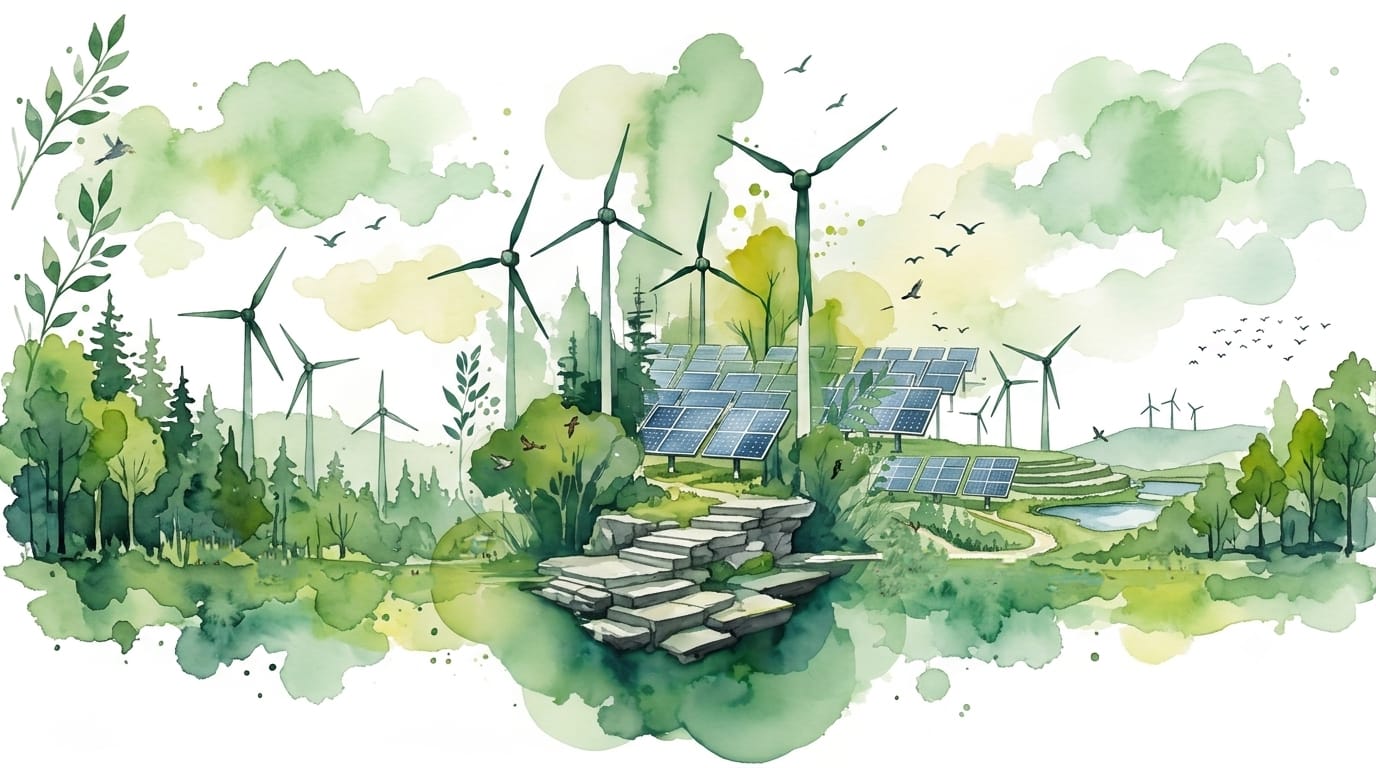
World Environment Day is celebrated every year on June 5 to raise awareness about the importance of protecting our environment. Nature is truly a gift from God. Without nature, no living being can survive on Earth. The air we breathe, the water we drink, the trees that provide oxygen, the birds that enrich biodiversity, and even the land on which we build our homes are all part of nature.
THE USAGE OF NATURE
Every living organism, from microscopic bacteria to the largest animals, depends on nature for survival. Water and air are essential for all forms of life. Plants and animals share a unique relationship. Plants absorb carbon dioxide and release oxygen through photosynthesis, while animals inhale oxygen and exhale carbon dioxide. Thus, plants and animals are interconnected and maintain the balance of life on Earth.
I can say that “Without plants there are no animals, without animals there are no plants”. In fact, plants and animals both respire; plants release oxygen and take in carbon dioxide, while animals take in oxygen and release carbon dioxide.
RAINFORESTS
Tropical rainforests are rich habitats for a huge variety of plants and animals. Enter a hot, damp and shady world. A rainforest is warm and sticky, with frequent downpours. The trees take up much of the rain, but water vapour soon evaporates from these leaves, filling the air with moisture. Tropical rainforests cover just 7% of Earth’s land, yet contain over half the world’s species.
AN UNFOLDING CRISIS OF INDIA
A survey by the Yale School of the Environment of 10,700+ indians found that most respondents had experienced at least one extreme event, including heat waves (71%), agricultural pests and diseases (60%), power outages (59%), water pollution (53%), droughts (52%), water shortages, and air pollution (52%). These findings are based only on data from the India Meteorological Department and the State of India: Environment report.
The Desertification and Land Degradation Atlas of India estimates that 29.7% of the country’s land is degraded. Yet despite this mounting environmental crisis, India still lacks a comprehensive understanding of the state of its environment.
In India, the environment sits on the backbench -starved of funds, with only 0.07% of the annual budget allocated to the Ministry of Environment, Forest and Climate Change.
KEEPING NATURE IN SIGHT
Home to one-sixth of humanity on just 4% of the earth’s land area, India must pursue growth while meeting climate commitments. In such circumstances, environmental concerns are often pushed to the margins.
THE NARMADA PROTEST
One of India’s most significant environmental movements was the Narmada Bachao Andolan, led by Medha Patkar. The movement opposed the displacement of thousands of people due to the construction of large dams on the Narmada River. Activists argued that increasing the dam’s height would submerge hundreds of villages and affect thousands of families who depended on the land for their livelihood. The protest highlighted the need to balance development with human rights and environmental protection.
Their dream to built from 110.64 meter to build it as 121.92 meter,if they built that 226 villagers will be under the water. Therefore, 36921 people will be under the water. in present 110.64 meter itself sinks 186 villagers and 27934 people, if they built that any of them not get their habitats. When they built 110.64 meters, many families suffered to get a place to live.
PLACHIMADA
Another important environmental struggle took place in Plachimada, Kerala. Local communities, especially tribal families, protested against excessive groundwater extraction by a soft drink company. They argued that overuse of groundwater caused severe water shortages in the region. The movement, led by activist Mayilamma, became a symbol of people’s efforts to protect natural resources and secure environmental justice.
MANGROVES OVER SEA WALLS
When Cyclone Dana made landfall near Bhitarkanika on Odisha’s coast, the region’s mangroves quietly provided a form of protection that billions of rupees in coastal infrastructure often struggle to deliver, reducing climate impacts while strengthening ecosystems and livelihoods. across india’s coast line mangroves seagrass meadows, coral reefs are already helping communities adapt to rising climate risks. Seawalls, groynes, and embankments continue to dominate adaptation spending, even though they can be costly to maintain and sometimes transfer risks elsewhere.
POLLUTION
Pollution: there are many types of pollution. It includes water pollution, air pollution, soil erosion, etc. It destroys our nature. It’s our duty to protect our nature. Nowadays, cities are being polluted. To reduce pollution, we have to work together.
In the end, Nature is our greatest treasure and our shared responsibility. Even in towns and cities, nature finds ways to survive and flourish. We can contribute to environmental protection by reducing plastic use, planting more trees, conserving water, keeping our surroundings clean, and protecting biodiversity.
Let us remember that our future depends on the health of our planet. Nature and humanity are not separate; they are deeply connected. Therefore, if we want a sustainable future, we must work together to protect and preserve our environment.
✍️ Muhammed Anas Kodagu
Imam Rabbani Kanthapuram







Post Comment